The Metrics That Actually Matter for B2B Marketing
Most B2B marketing dashboards are filled with numbers that look impressive in meetings but tell you almost nothing about whether marketing is actually contributing to revenue growth.
If you're running a growth-stage B2B company, you need marketing metrics that connect to business outcomes. Here's what actually matters—and what you can stop obsessing over.
Stop Tracking Vanity Metrics
Let's start with what doesn't matter as much as your marketing team wants you to believe.
Website traffic tells you people found you. It doesn't tell you if the right people found you or what they did once they arrived. A surge in traffic from irrelevant sources is worse than useless—it's misleading.
Social media engagement measures whether people clicked a heart icon. Unless you're a B2C brand building consumer awareness, likes and shares have almost no correlation to pipeline.
Email open rates confirm someone glanced at a subject line. That's table stakes, not an outcome worth reporting to leadership.
These metrics aren't worthless. They're just not what you should be making decisions on. They're indicators of activity, not results. And in B2B marketing, activity without outcomes is just expensive noise.
The Metrics That Connect to Revenue
Here's what you should be tracking instead.
Marketing Qualified Leads (MQLs) to Sales Qualified Leads (SQLs) Conversion RateThis tells you whether marketing is generating leads that sales actually wants to pursue. If marketing is hitting MQL targets but very few are converting to SQL, you have a quality problem, not a volume problem.
When this conversion rate is strong, it signals genuine alignment between marketing's targeting and what sales needs to close business.
Sales Accepted Lead (SAL) to Opportunity Conversion RateOnce sales accepts a lead, how often does it turn into a real opportunity? This metric exposes whether your lead qualification criteria actually align with what moves through your sales process.
Healthy conversion at this stage means your definition of "qualified" matches reality.
Customer Acquisition Cost (CAC) by ChannelWhat does it actually cost you to acquire a customer through paid search versus content marketing versus events? Most companies know what they spend by channel but can't tell you what they get back.
Calculate this properly: total marketing and sales costs for a channel divided by customers acquired from that channel. Track it quarterly and watch the trends.
Marketing-Sourced Pipeline ValueHow much qualified pipeline did marketing generate this quarter? Not influenced—sourced. This is pipeline where marketing created the first meaningful touch, not where they sent an email to an existing sales conversation.
If you're spending significant money on marketing but can't point to meaningful marketing-sourced pipeline, something's broken. Your pipeline needs to justify the investment.
Time to RevenueHow long does it take from first marketing touch to closed deal? This metric helps you understand what realistic expectations should be and where bottlenecks exist in your funnel.
If marketing-sourced deals take significantly longer than other sources, you need to investigate why—and whether that extended timeline changes the economics.
Customer Lifetime Value (LTV) from Marketing ChannelsNot all customers are created equal. The customer you acquired through a content download might have twice the lifetime value of the customer who clicked a paid ad. Track LTV by source so you know where to invest more aggressively.
What This Means in PracticeYou don't need a sophisticated marketing attribution platform to track these metrics. You need clear definitions, consistent tracking in your CRM, and someone who actually reviews the data monthly to make strategic decisions.
Most growth-stage companies I work with are tracking 15-20 marketing metrics when they should be tracking five that matter. The goal isn't comprehensive reporting. It's knowing whether marketing is contributing to revenue growth at an acceptable cost—and where to adjust when it's not.
If you can't quickly answer whether marketing generated meaningful qualified pipeline, or what your CAC is by channel, or how MQL-to-SQL conversion is trending, you're tracking the wrong things.
Focus on metrics that tell you whether marketing is worth the investment. Everything else is just noise in a dashboard.
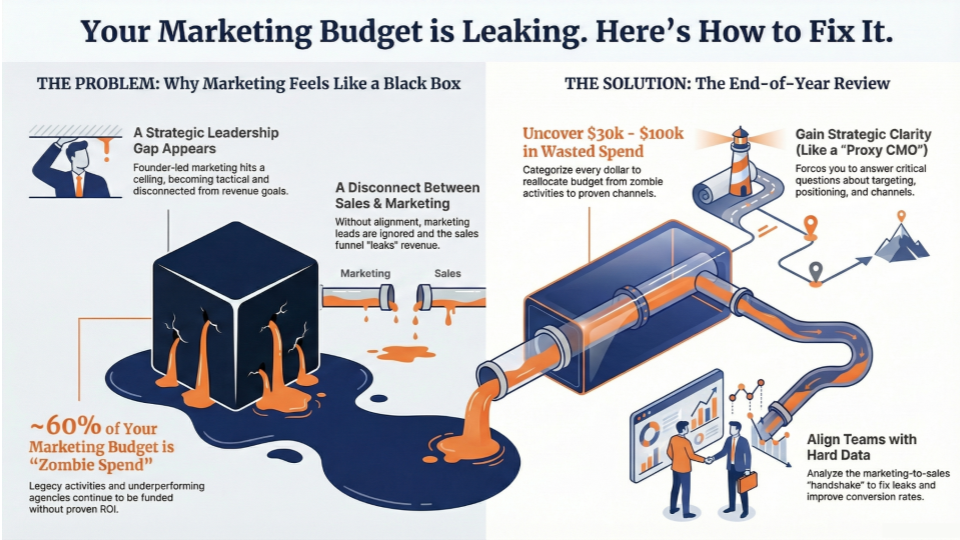
Here's the problem: you know these are the right metrics to track, but you don't have someone who owns measuring them, interpreting them, and making strategic decisions based on what the data says. Your agency reports on their piece. Your sales team tracks their numbers. But no one is connecting marketing investment to business outcomes in a way that tells you what's working and where to adjust.
That's exactly what a fractional marketing director provides—strategic oversight that connects your marketing metrics to revenue growth. Not monthly reports filled with vanity metrics, but clear answers to whether marketing is justifying its investment and where your next dollar should go. If you're spending $50K+ on marketing but can't quickly answer whether it's generating qualified pipeline at an acceptable cost, let's talk about bringing that accountability to your marketing function.